Tips for First Time Car Buyers: A Confident Purchase Guide
January 22 2026 - dave@phatoon.com
Buying your first car is a huge step, and the best advice always starts in the same place: getting your finances in order. Before you even think about colors or features, you need to build a realistic budget, get a handle on the true cost of ownership, and figure out what a sticker price actually means for your bank account each month.
Nailing this from the start is the key to making sure your new car feels like freedom, not a financial headache.
 This isn't just about the price you see on the windshield. True affordability means looking at the bigger picture.
Getting this right means doing your homework, which is easier than ever. In fact, 92% of consumers now research vehicles online before ever setting foot in a dealership, spending nearly 15 hours on their journey.
Here on Long Island, dealerships like Habberstad Kia make this simple with online tools to estimate payments, value your trade-in, and browse everything from the family-sized Telluride to the all-electric EV9. You can learn more about how digital tools are shaping consumer car-buying habits and start building your plan from the comfort of your home.
Ultimately, a table can only tell you so much. The best choice is the one that feels right for you.
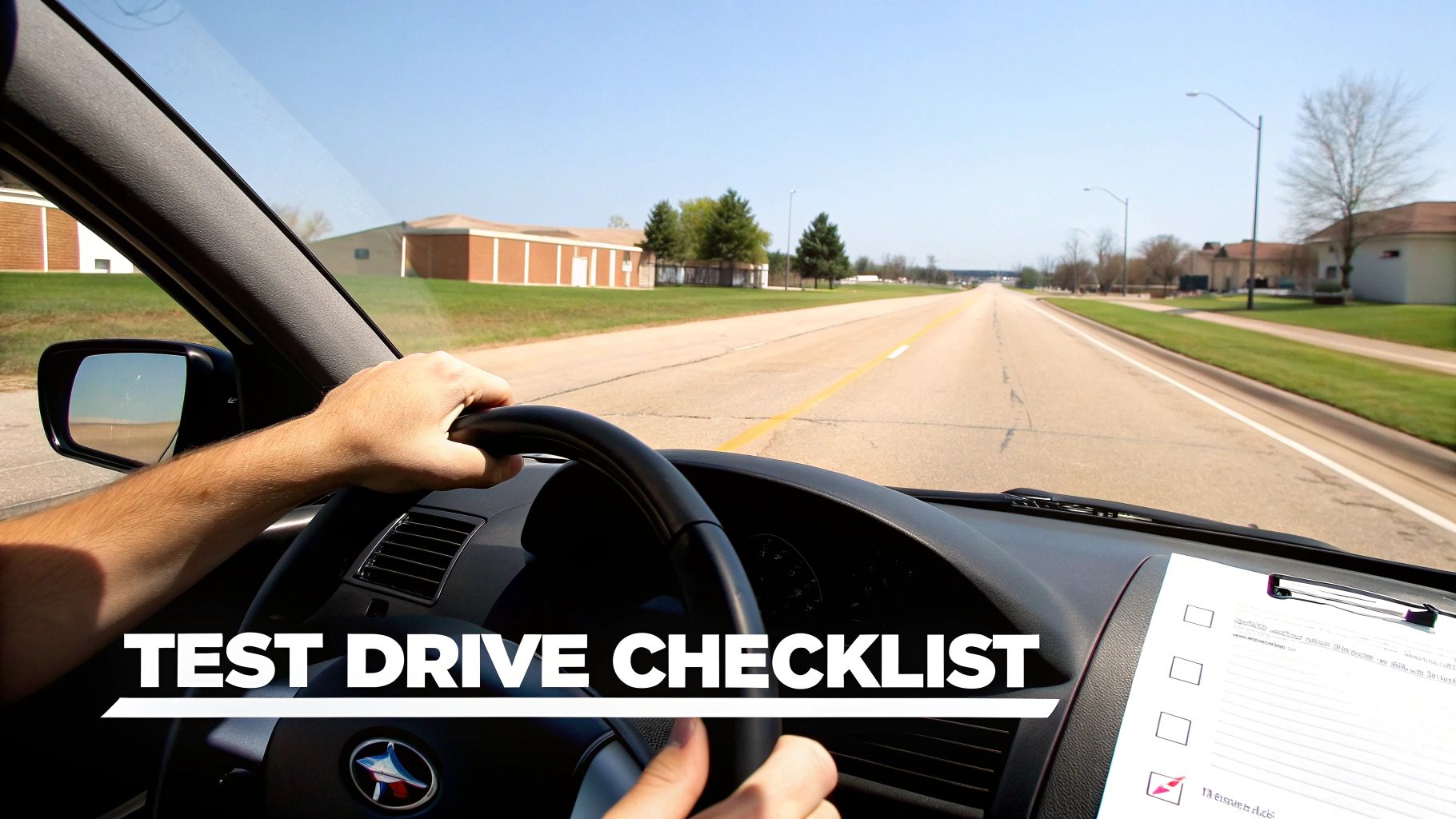 This is where the contenders get separated from the also-rans. A car can look perfect on paper but feel completely wrong once you’re actually behind the wheel. Taking your time here is one of the most critical tips for first time car buyers you'll ever get.
Ready to explore your options with a team that gets what first-time buyers need? The experts at Habberstad Kia are here to answer all your questions and guide you to the perfect vehicle. Visit us in Huntington or browse our inventory online today!
Starting Your Journey With a Smart Financial Plan
Jumping into the car-buying process without a budget is like hopping on the LIE with no destination in mind—you’ll burn a lot of gas and probably end up somewhere you don't want to be. Your financial plan is your roadmap. It grounds your search in reality and turns a dream car into an attainable goal.
This isn't just about the price you see on the windshield. True affordability means looking at the bigger picture.
Understanding the Full Cost of Ownership
To create a budget that won't break the bank, you have to account for everything. Think well beyond the monthly payment. Here are the big ones:- Car Insurance: Your rate can swing wildly depending on the car you choose, your driving history, and even your specific town on Long Island.
- Taxes and Fees: Don't forget about New York sales tax, title fees, and dealership documentation fees. They can add a significant chunk to the final price.
- Fuel: Get a rough idea of your weekly mileage. Will you be commuting from Huntington to Hauppauge? Those gas station trips add up fast.
- Maintenance and Repairs: You need to budget for routine things like oil changes and tires, and it's smart to have a little cushion for unexpected repairs, especially if you're looking at a used car.
Applying the 20/4/10 Rule
A great rule of thumb to keep your budget in check is the 20/4/10 rule. It’s a simple, proven framework that helps you avoid stretching yourself too thin.The 20/4/10 rule is a trusted financial checkpoint for car buyers. It recommends a 20% down payment, a loan term no longer than four years (48 months), and total transportation costs (payment, insurance, fuel) that do not exceed 10% of your gross monthly income.Think of this as a starting point, not a strict law. If your other expenses are low, you might have more wiggle room. But for most first-time buyers, it’s a fantastic safety net to ensure your car payment doesn't take over your life. To help you organize these moving parts, here’s a quick checklist of what to consider.
Your First Car Budget Checklist
| Budget Component | Recommended Guideline | Why It Matters for Your First Purchase |
|---|---|---|
| Down Payment | 20% of the vehicle's price | A larger down payment reduces your loan amount, lowers your monthly payment, and helps you build equity faster. |
| Loan Term | 4 Years (48 months) maximum | A shorter loan term means you'll pay less interest over the life of the loan and own your car sooner. |
| Total Monthly Car Costs | No more than 10% of gross income | This includes your payment, insurance, and estimated fuel. It prevents your car from straining your overall budget. |
| Insurance Estimate | Get quotes before you buy | Insurance can be a major expense. Knowing the cost for specific models helps you choose a car you can truly afford. |
| "Hidden" Costs Fund | Budget for taxes, fees, and registration | These one-time costs can add thousands to your final bill. Don't let them be a surprise. |
| Maintenance Savings | Set aside $50-$100 per month | This creates a buffer for routine service and unexpected repairs, keeping you on the road without financial stress. |
Navigating Car Loans and Financing
For most first-time buyers, figuring out the financing is the most stressful part of the process. It's easy to get lost in the jargon. But let's break it down—it's really just a conversation about numbers, and understanding them puts you in control. Think of it less like a final exam and more like finding the right tool for the job. Once you grasp a few key ideas, you can make the loan work for you, not against you.Getting a Grip on the Language of Loans
Before you can get a good deal, you need to speak the language. There are really only three terms that matter most when you're sitting in the finance office.- Annual Percentage Rate (APR): This is the big one. Your APR is the true cost of borrowing the money, expressed as a yearly rate. It’s the interest rate plus any lender fees rolled into one number, making it the best way to compare loan offers. The lower the APR, the less you pay over the life of the loan. Simple as that.
- Loan Term: This is just how long you have to pay the loan back, usually shown in months like 48, 60, or 72. A shorter term means a higher monthly payment, but you’ll pay way less in total interest. A longer term drops your monthly payment, but you'll end up paying significantly more for the car in the long run. It's a trade-off.
- Down Payment: This is the money you bring to the table upfront. A healthy down payment is your best friend—it shrinks the amount you need to finance. A good rule of thumb is to aim for 20% on a new car. This not only lowers your monthly payment but can also help you get a better APR.
The Smartest First Move: Get Pre-Approved
Here’s a piece of advice I give every first-time buyer: walk into the dealership with a loan pre-approval already in your pocket. Getting one from your own bank or a local credit union is like showing up to a negotiation with a winning hand. A pre-approval letter is your proof that you're a serious, ready-to-go buyer. It also sets a hard-and-fast budget ceiling, which keeps you from getting emotionally attached to a car you can't realistically afford. You'll know your limit before you even step on the lot.Getting pre-approved for a car loan before you shop is one of the smartest moves a first-time buyer can make. It establishes your budget, strengthens your negotiating position, and allows you to compare the dealership's financing offer against one you already have, ensuring you get the best possible rate.With that pre-approval secured, your focus shifts. You can concentrate on finding the perfect car and getting a fair price for it, knowing the financing side is already handled. It completely changes the dynamic and puts you firmly in the driver's seat.
What Are Lenders Looking For?
When you apply for a loan, a lender is asking one simple question: "What's the risk you won't pay us back?" They size this up by looking at a few key things.- Credit Score: This is your financial report card. A strong score, typically 700 or higher, shows a history of paying your bills on time and managing debt well. It’s your ticket to the best interest rates.
- Income and Employment: Lenders need to see that you have a steady paycheck. They want to be confident that your income can comfortably cover the new car payment on top of your other bills.
- Debt-to-Income (DTI) Ratio: This is a big one. Lenders compare how much you owe each month (rent, credit cards, student loans) to how much you earn. A low DTI ratio tells them you aren't overextended and have room in your budget for a car loan.
Choosing Between New and Certified Pre-Owned Cars
This is one of the first big forks in the road for any car buyer: do you go for that brand-new car smell or the savvy value of a pre-owned vehicle? Honestly, there’s no single right answer here. It all comes down to what fits your budget, your lifestyle, and your peace of mind. A new car is an incredible feeling. You're the first owner, you get all the latest bells and whistles, and you're covered by a full factory warranty. Nothing beats knowing that every single mile on the odometer is yours. But let's talk about the biggest draw for a pre-owned car: the price. A new car's value drops the fastest in its first couple of years. It's called depreciation, and by buying a car that's just a few years old, you let the original owner take that biggest financial hit. You get a whole lot more car for your money.Finding the Sweet Spot with Certified Pre-Owned
For many first-time buyers on Long Island, the perfect compromise is a Certified Pre-Owned (CPO) vehicle. Think of it as the best of both worlds—you get the lower price of a used car paired with the confidence and warranty that feels a lot like buying new.A Certified Pre-Owned vehicle isn't just any car someone traded in. To earn the "certified" badge, it has to be a recent model with low mileage, pass a detailed, multi-point inspection, and comes backed by a manufacturer's warranty. It's a level of quality assurance you just don't get with a typical used car.This means you’re getting a vehicle that a factory-trained technician has already given a thorough once-over, all while sidestepping that initial, steep depreciation. It's simply a smarter way to spend your money without rolling the dice on reliability. As you weigh these options, it's a good idea to have your financing in order. Getting pre-approved for a loan before you even start shopping puts you in a powerful negotiating position, no matter if you land on a new or CPO car. To help you see the differences at a glance, here’s a quick breakdown.
New vs CPO vs Used: A Quick Comparison
| Feature | New Car | Certified Pre-Owned | Standard Used Car |
|---|---|---|---|
| Initial Cost | Highest | Medium | Lowest |
| Depreciation | Steepest in first 1-3 years | Slower; initial hit absorbed | Slowest |
| Warranty | Full factory warranty | Extended manufacturer warranty | Often "as-is" or limited |
| Condition | Pristine, no wear | Excellent, inspected & reconditioned | Varies greatly |
| Technology | The very latest features | Recent, but not always current | Can be several generations old |
| Financing Rates | Typically the lowest available | Competitive, often near new rates | Higher rates, stricter terms |
Making the Final Decision
So, how do you actually decide? Start by asking yourself a few simple questions:- What's my absolute max budget? If keeping monthly payments as low as possible is your top priority, a CPO or a standard used car is going to be your best bet.
- Do I need the latest tech? If you can't live without the biggest new touchscreens and advanced safety features, then a brand-new car is probably for you.
- What’s my tolerance for risk? A new car comes with almost zero risk of surprise repairs. A CPO vehicle dramatically reduces that risk compared to a standard used car, thanks to that inspection and warranty.
How to Master the Test Drive and Vehicle Inspection
You’ve crunched the numbers and narrowed down your list. Awesome. Now for the most important part of the entire process: the test drive. This is way more than a quick spin around the block; it's your only real chance to see how a car feels in your world. Think of it as a final interview for the car. You’re the hiring manager, and you need to know if it’s the right fit for the job.
This is where the contenders get separated from the also-rans. A car can look perfect on paper but feel completely wrong once you’re actually behind the wheel. Taking your time here is one of the most critical tips for first time car buyers you'll ever get.
Your Test Drive Game Plan
To make the most of your time, go in with a plan. Don’t just drive around aimlessly—try to recreate the kind of driving you do every single day.- Simulate Your Commute: Stick to roads you know. If your daily drive involves hopping on the Northern State Parkway, you need to feel how the car merges and handles at highway speeds. If you're constantly squeezing into tight spots in Huntington Village, test its maneuverability.
- Use Your Senses: Kill the radio and just listen. Do you hear any weird rattles, whines, or clunks? Pay close attention to how the car feels. Is the ride smooth or are you feeling every single bump? Does the steering feel sharp and responsive or mushy?
- Test Brakes and Acceleration: On a safe, empty stretch of road, give the brakes a firm press. They should feel solid and bring the car to a stop without any drama. When you accelerate, feel for any hesitation or sluggishness. It should feel confident.
- Check Comfort and Visibility: Get the driver's seat, mirrors, and steering wheel adjusted just right. Can you get truly comfortable? How are the blind spots? Make sure all the important controls are easy to reach and make sense without having to look down.
At the end of the day, a test drive is meant to answer one simple question: "Can I genuinely see myself driving this car every day for the next few years?" If you have any nagging doubts, it’s not the one.
The Walk-Around Inspection Checklist
Before you even turn the key, give the car a thorough walk-around. This is absolutely essential for a Certified Pre-Owned vehicle, but it's a smart habit even with a brand-new car. You're just looking for anything that seems off. Here’s a quick checklist for the outside:- Tires: Look for uneven wear, which could hint at an alignment issue. Ideally, all four tires should be the same brand and have plenty of tread.
- Paint & Body: Scan the panels for mismatched paint colors—a dead giveaway of a past repair. Check for obvious dents, deep scratches, or any rust, especially under the doors and around the wheel wells.
- Glass: Inspect the windshield for any cracks or big chips. Those things have a bad habit of spreading.
- Electronics: Test everything. And I mean everything. The A/C, heat, infotainment screen, power windows, sunroof, USB ports—the works.
- Upholstery: Look for any major rips, weird stains, or funky smells.
- Lights: Have the salesperson help you check all the exterior lights: headlights (high and low beams), brake lights, taillights, and turn signals.
Negotiating With Confidence and Valuing Your Trade-In
Let’s be honest: for most first-time buyers, the idea of negotiating a car price is stressful. It can feel like a high-stakes showdown where you're automatically at a disadvantage. But it doesn't have to be that way at all. The best way to think about it is as a calm, informed conversation. Your goal isn't to "win" a battle; it's to land on a fair price that works for both you and the dealership. The key to feeling confident isn't about being aggressive—it's about being prepared. All that research you did on vehicles, your budget, and getting that financing pre-approval? That’s your power. You're walking in knowing the facts, not just guessing. This knowledge completely changes the dynamic. Instead of feeling defensive, you can discuss the price with confidence, backed by real data. This is one of the most powerful tips for first time car buyers because it puts you in the driver's seat before the conversation even begins.Unlocking Your Trade-In Value
If you have a car to trade in, don't think of it as just a small discount. It's a major asset that can significantly lower the cost of your new vehicle. Getting its true value is a huge piece of the puzzle. Here's the smartest strategy: treat your trade-in as a totally separate transaction from the new car purchase. Before you even visit the dealership, get a clear idea of what your car is worth using trusted online tools.A great starting point is the Blue Book® Value tool that Habberstad Kia has right on their site. You can enter your car's details and get a market-based estimate instantly. This gives you a solid baseline number and prevents you from accepting a lowball offer.Once you have this independent valuation, focus on negotiating the price of the new car first. Get that number locked in. Then, and only then, bring up your trade-in. This keeps the two deals clean and ensures you get the full value you deserve for your old car.
Your Game Plan for the Final Conversation
With your research done and your trade-in value sorted, you're ready for the final step. Remember, the goal is simply to agree on a price that reflects the car's actual market value. Here's a simple, respectful way to handle the negotiation:- Start with Your Research: Calmly mention the fair market price you've seen on sites like Kelley Blue Book or Edmunds.
- Make a Reasonable First Offer: Based on that data, make a fair opening offer. This signals that you're a serious buyer who has done their homework.
- Focus on the "Out-the-Door" Price: This is your magic number. It includes the car's price plus all taxes, title fees, and dealership charges. Focusing on this single figure prevents any surprise costs from popping up at the end.
- Be Ready to Walk Away: If the numbers just don't line up with your budget and research, it's completely okay to thank the salesperson for their time and leave. Honestly, sometimes this is the most effective negotiating tool there is.
Common Questions from First Time Car Buyers
Buying your first car is a huge milestone, but it's totally normal to have a million questions spinning in your head. Getting clear, straightforward answers is the best way to quiet the noise and move forward feeling confident. We hear the same concerns from first-time buyers all across Long Island, so let's tackle them head-on. Think of this as your personal cheat sheet. Getting these fundamentals right from the beginning will save you a ton of stress, time, and money in the long run.How Much Should I Put Down on My First Car?
Your down payment is your single best tool for making a car more affordable. The classic rule of thumb is to aim for at least 20% of the sticker price for a new car. If you're looking at a used vehicle, 10% is a solid target. Why is this so important? Simple: the more you put down, the less you have to borrow. A bigger down payment shrinks your monthly payments and cuts down on the interest you'll pay over the life of the loan. It also helps you get "right-side-up" on your loan faster, so you won't owe more than the car is actually worth.What Hidden Costs Should I Budget For?
The price you see on the windshield is just the starting line. To build a realistic budget and avoid any nasty surprises, you have to account for the other essential costs of car ownership.- Insurance: This is a big one, especially for new drivers who often face higher rates. Get a few quotes before you commit to a specific car.
- Taxes and Fees: Don't forget about New York sales tax, DMV registration fees, and the dealer's documentation fee. These add up.
- Maintenance Fund: Cars need love. Set aside a little cash each month for routine things like oil changes and tire rotations, and build a small emergency fund for those unexpected repairs.
Should I Get Financing from the Dealer or My Bank?
Honestly, you should look into both. It’s a great idea to walk into the dealership with a pre-approval from your own bank or a local credit union. This gives you a baseline offer—a concrete number you can use as a point of comparison. But don't stop there. Dealerships like Habberstad Kia have relationships with a whole network of lenders, and they can often shop your application around to find a better rate than you could on your own. When you have a pre-approval from your bank in your back pocket, you’re in the driver's seat to compare offers and pick the one that truly saves you the most.At the end of the day, your goal is to lock in the lowest Annual Percentage Rate (APR) possible. Making your bank and the dealership compete for your business is the best way to ensure you get a great deal.
What Is a Certified Pre-Owned Vehicle?
Think of a Certified Pre-Owned (CPO) vehicle as the perfect sweet spot between brand-new and standard used. It’s a pre-owned car, but with a whole lot more protection and peace of mind. To even qualify for certification, a car has to be a recent model with low miles. Then, it goes through an exhaustive multi-point inspection by a technician who knows the brand inside and out. CPO cars also come bundled with benefits you just don't get with a typical used car, like an extended factory warranty, a full vehicle history report, and even roadside assistance.Ready to explore your options with a team that gets what first-time buyers need? The experts at Habberstad Kia are here to answer all your questions and guide you to the perfect vehicle. Visit us in Huntington or browse our inventory online today!