At its heart, the choice between leasing and buying comes down to a single question: do you want lower monthly payments for a brand-new car, or do you want to eventually own a vehicle and build equity? There's no wrong answer, but your priorities—short-term cost versus long-term value—will point you in the right direction.
Your 2026 Kia Decision: Leasing vs. Buying
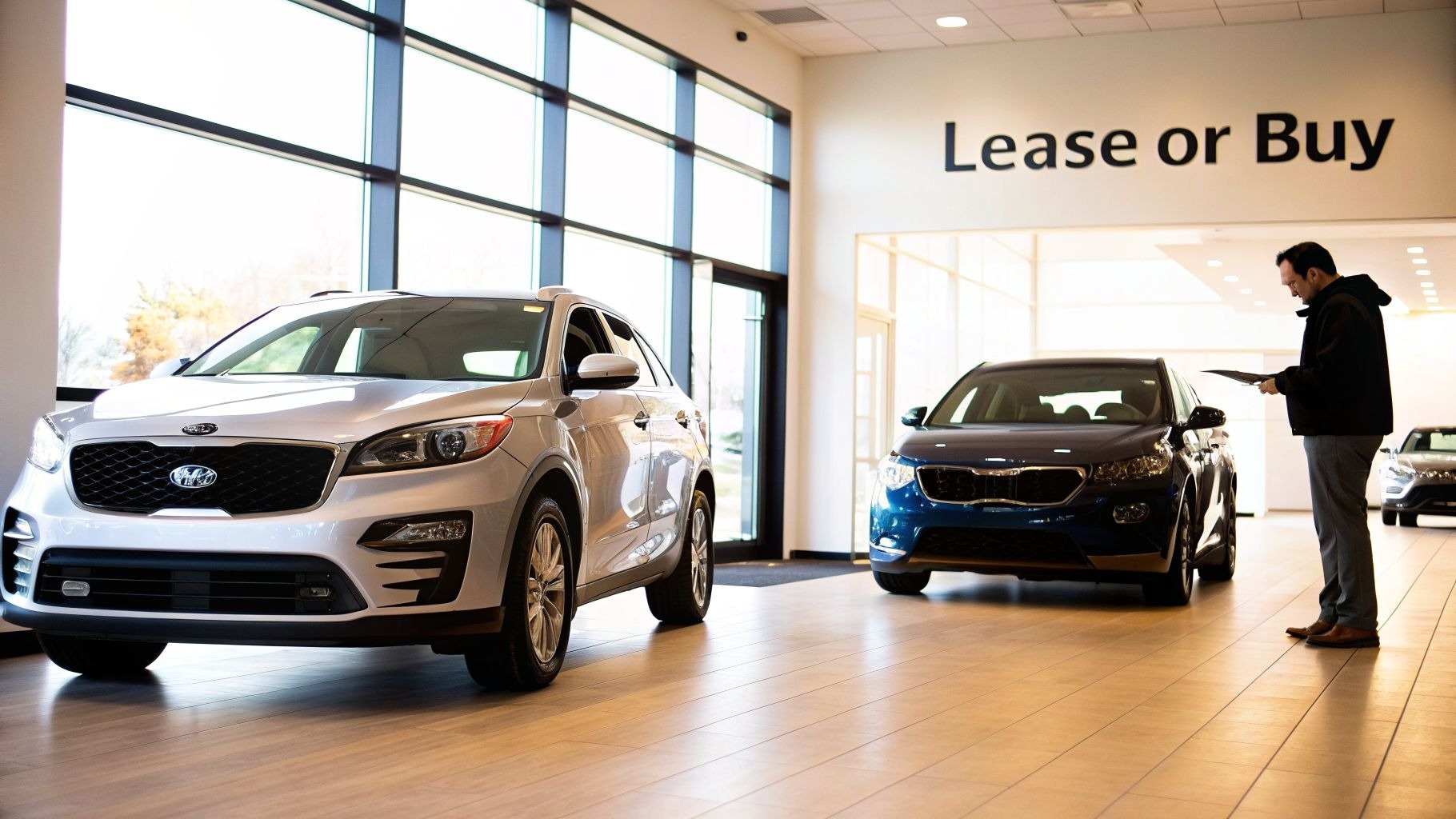
Here on Long Island, choosing how you'll get into your next Kia is one of the biggest decisions you'll make. This guide is designed to cut through the noise and give you a straight-to-the-point look at how your personal driving habits and financial goals should shape your 2026 vehicle choice. Whether you have your eye on a spacious Kia Telluride for the family or a sleek Kia K5 for commuting, the decision isn't black and white. It’s all about finding the best strategy for your budget and lifestyle.
Think of it this way: leasing is like a long-term rental. You pay to use the car during its best years. Buying is a path to ownership, where you finance the full price to one day own it outright as a valuable asset.
To help you frame this decision, we've put together a direct comparison of how each option works. This table gives you a quick snapshot of what to expect when you walk into Habberstad Kia, so you can come prepared.
A Quick Look at Leasing vs. Buying a Kia
This summary breaks down the most important factors, from costs and equity to mileage and freedom, giving you a clear foundation before we get into the finer details.
| Consideration | Leasing a Kia | Buying a Kia |
|---|---|---|
| Monthly Payments | Typically lower, since you're only paying for depreciation. | Typically higher, because you're financing the car's entire cost. |
| Ownership & Equity | You don't own the car or build any equity in it. | You own the car once the loan is paid off and build equity. |
| Mileage | Comes with annual mileage limits (e.g., 12,000 miles/year). | No mileage restrictions; drive as much as you'd like. |
| Customization | Very limited. The vehicle has to be returned in its original condition. | You can customize or modify the vehicle however you see fit. |
| Upfront Costs | Often requires a smaller down payment, and sometimes none at all. | Usually requires a more substantial down payment to lower payments. |
| Long-Term Outlook | A continuous cycle of car payments for a new car every few years. | Eventually leads to a time with no car payments and an asset you can sell. |
The Financial Case for Buying Your Next Kia
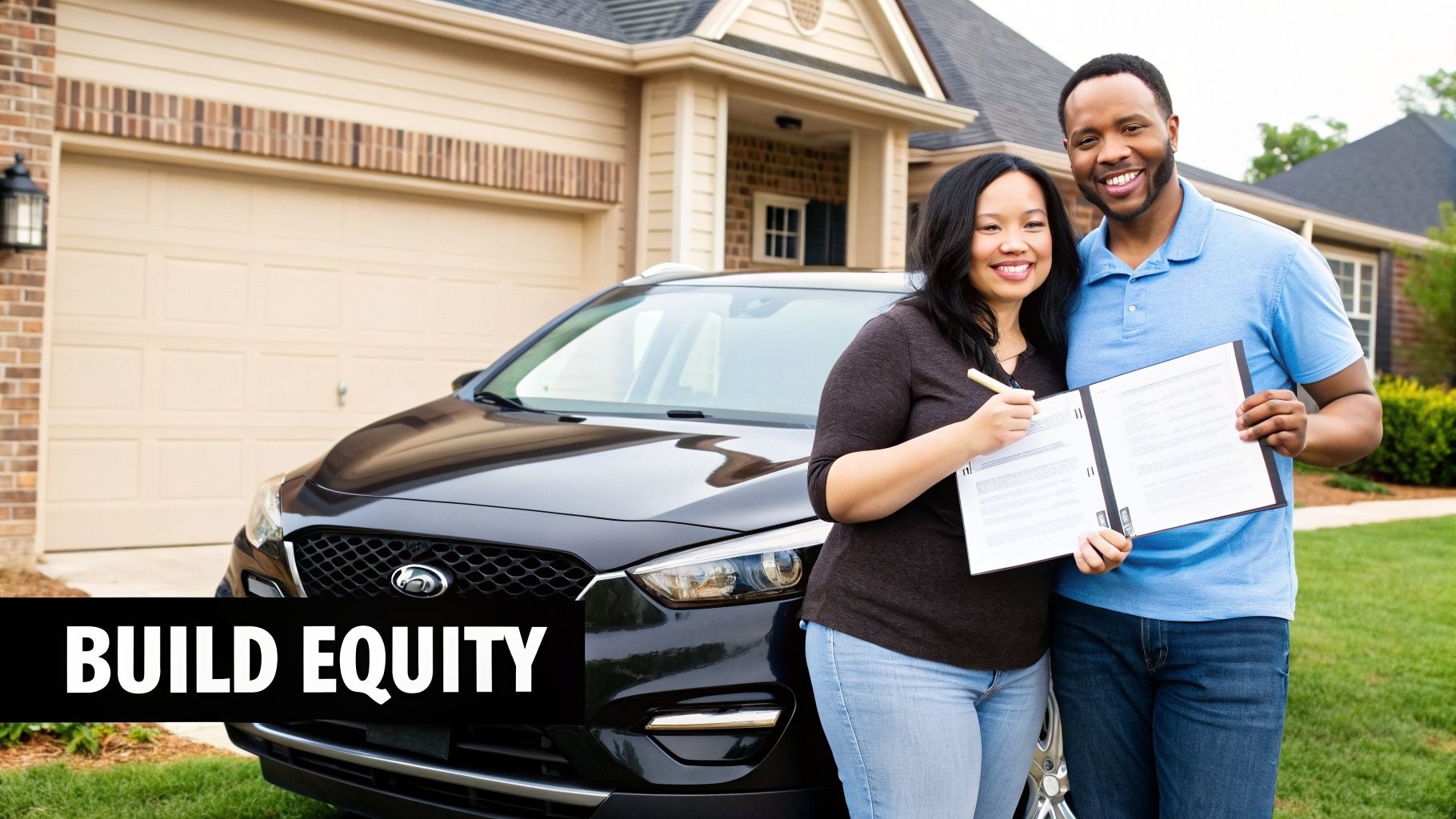
For a lot of drivers here on Long Island, the dream isn't just about getting a new car—it's about the day you make that final payment and own it outright. Buying your next Kia is the most direct route to that finish line. While leasing has its perks for short-term flexibility, purchasing is all about the long game: building real, tangible equity. When you finance a vehicle like the versatile Kia Sportage or the family-ready Kia Sorento, every single payment is an investment. You're not just renting the car by covering its depreciation; you're actively buying your stake in it. Once that loan is paid off, the car is 100% yours. It’s an asset you can sell, trade in, or simply enjoy for years to come, completely free of monthly payments. That difference is more important now than ever. Recent studies have shown that buying a car and holding onto it for six years can end up costing thousands less than leasing a similar car for two consecutive three-year terms. As vehicle values have gone up, the math has tilted even more in favor of ownership. You can explore more data on why buying often delivers superior long-term value in today's market.
Building Equity With Every Payment
So, how does an auto loan actually build your ownership stake? It’s pretty straightforward. When you buy a Kia Telluride, you take out a loan for the vehicle's price after your down payment. Each monthly payment you make is split into two parts:
- Principal: This is the portion that directly chips away at your loan balance, increasing your equity.
- Interest: This is the fee for borrowing the money, based on your loan's Annual Percentage Rate (APR).
Putting down a larger down payment is one of the smartest moves a buyer can make. It doesn't just lower the amount you borrow; it often helps you lock in a better interest rate, which can save you a bundle over the life of the loan. Here at Habberstad Kia, our finance team has the experience to find competitive rates that make your purchase work harder for you.
A leased car is essentially a long-term rental—a recurring expense. When you buy a Kia, you're investing in an asset that becomes part of your financial portfolio.
Long-Term Savings and Total Cost of Ownership
It’s true that a monthly loan payment is often higher than a lease payment for the same car. But when you zoom out and look at the total cost over many years, buying almost always comes out ahead. The real magic happens after the loan is paid off. Let's walk through a common scenario. Say you finance a new Kia Sorento with a six-year (72-month) loan. For those first six years, you have a predictable monthly payment. But then, in year seven, that payment is gone. You now own a reliable, modern SUV with real market value, and you've eliminated a major monthly bill.
- Years 1-6: You make your monthly loan payments, building equity step by step.
- Years 7-9 (and beyond): You’re driving payment-free. Your only costs are the usuals: insurance, gas, and maintenance. That money that used to go to a car payment is now freed up for savings, vacations, or anything else.
That period of payment-free ownership drastically reduces your average annual transportation costs. If you had leased for those same nine years, you’d be starting your third lease term, still making payments, and have zero equity to show for it. For anyone planning to keep their car for the long haul, buying isn't just a choice—it's a powerful financial strategy.
When Leasing a Kia Makes More Sense

While owning a car is a great long-term goal, leasing often makes more sense for drivers who are focused on the here and now. If you prioritize a lower monthly payment and love the idea of driving a brand-new car every few years, a lease is tough to beat. The appeal is simple: you’re not paying for the car’s entire value. Your payments just cover the depreciation, which is the amount of value the vehicle is expected to lose during the time you drive it. For many Long Island drivers, this is the key to getting behind the wheel of a nicer, better-equipped car than they could comfortably afford to buy outright. Leasing a Kia K5 or Kia Stinger allows you to experience premium features and performance without the long-term financial weight of a car loan.
The Big Draw: Lower Monthly Payments
Let’s put that into perspective. Say you’re looking at a new Kia Seltos for your commute. The monthly payment on a typical 36-month lease for that Seltos will almost always be considerably lower than the payment on a 60-month loan for the very same car. That difference can easily free up hundreds of dollars in your budget each month. That extra cash flow gives you breathing room. You can put it toward savings, handle other bills, or just enjoy a little less financial pressure. Leasing provides an immediate, noticeable benefit to your monthly finances.
We see it all the time—leasing is about predictable costs and zero surprises. You're getting the absolute best years of a new Kia's life with a full warranty, that new-car smell, and the latest features, all bundled into one manageable monthly payment.
It is important, though, to be realistic about the current market. Lease payments in 2026 are generally higher than they were a few years ago due to rising vehicle prices and different residual value calculations. Sometimes, buying can be more economical over a three-year period. However, under the right market conditions, leasing a new Kia for exactly three years can actually be the cheaper option by around $2,900. It all comes down to your personal driving habits and financial plans. You can discover more insights about these 2026 market trends here.
Enjoy the Best Years with No Hassles
One of the biggest perks of leasing a Kia is the complete peace of mind it offers. Your lease term, which is usually three years, fits perfectly within Kia’s fantastic factory warranty. This means you’ll probably never see a bill for a major, out-of-pocket repair. Maintenance is routine, and the big-ticket items are covered. This worry-free experience continues right up until the day your lease ends. You get to skip all the typical headaches that come with selling a used car.
- No Selling Required: Forget about finding a private buyer, haggling over the price, or dealing with a mountain of paperwork.
- A Simple Return: You just schedule a time to drop the car off back here at Habberstad Kia, settle any final fees for mileage overages or excess wear, and you’re on your way.
- An Easy Upgrade: From there, hopping into another brand-new Kia is seamless. You can always have a car with the most up-to-date safety features and technology.
For Long Island drivers with predictable commutes who stay under 12,000 miles per year, the choice is often clear. If you value having a fresh car every few years with low payments and no maintenance worries, leasing a new Kia Carnival or Kia Telluride is an outstanding option.
How the Kia EV6 and EV9 Change the Leasing vs. Buying Game
When you bring an electric vehicle like the Kia EV6 or EV9 into the leasing versus buying conversation, things get a lot more interesting. For anyone shopping on Long Island, the unique financial quirks of EVs add a whole new dimension to the decision. It's about more than just the monthly payment. One of the biggest factors we've seen impact this choice is the way federal tax credits have been applied. For a while, leasing an EV was a brilliant financial shortcut. The leasing company, as the official owner of the car, would claim the $7,500 federal tax credit and then pass that savings directly on to you. This was a big deal. It came in the form of a capitalized cost reduction, which is just a fancy way of saying it lowered your monthly payments from day one. That $7,500 credit, spread over a 36-month lease on a Kia EV6, shaved about $208 off your payment each month. This "lease loophole" even allowed drivers whose income was too high to qualify for the purchase credit to still get the benefit.
The Shifting Landscape of EV Incentives
But here's the catch: the EV market moves fast. With some federal tax credits expiring in 2026, that automatic $7,500 lease advantage isn't the given it once was. This change actually makes manufacturer incentives and specific dealership offers more important than ever. For Long Island drivers looking at Kia’s incredible electrified lineup—from the all-electric EV6 and EV9 to the hybrid Niro, Sportage, and Sorento—it's time to get back to basics. You need to carefully weigh the current lease deals against the financing options for a purchase. Staying on top of these market shifts is key, and getting more details on how tax credits influence the lease vs. buy decision can help you make a smarter choice.
For tech-focused drivers, leasing an EV is like having a subscription to the latest innovation. You get to experience cutting-edge battery and software advancements every few years without worrying about long-term depreciation.
Technology and Resale Value: The Great Unknown
Beyond incentives, the sheer speed of EV innovation is a massive consideration. Battery technology gets better every single year, delivering more range and faster charging speeds. What feels state-of-the-art today might be standard-issue in three years, and that can hit resale value hard. This is where leasing an EV like the Kia EV6 or EV9 really shines. It acts as a shield against that rapid depreciation. You’re simply paying to drive the car during its prime, and at the end of your term, you hand over the keys. Then you're free to jump into the newest model with all the latest upgrades. On the flip side, buying a Kia EV9 is a vote of confidence in the car's long-term value and technology. If you’re the type of driver who loves your car and plans to keep it for years, purchasing allows you to build real equity. You'll own a tangible asset and eventually enjoy driving an electric car with no monthly payments.
Kia EV Lease vs Buy Comparison (3-Year Scenario)
To really put it in perspective, let's look at a simplified comparison for leasing versus buying a new Kia EV6 over three years. This table cuts through the noise and focuses on what truly matters when it comes to EV ownership.
| Consideration | Leasing a Kia EV6 | Buying a Kia EV6 |
|---|---|---|
| Technology Risk | Low. You're protected from rapid depreciation and can easily upgrade to the newest model in 3 years. | Higher. You own the vehicle, so you also own the risk if new tech makes your model less desirable. |
| Ownership & Equity | None. You're essentially renting the car. At lease-end, you have no asset to show for your payments. | Full Ownership. Every payment builds equity. You are investing in an asset you can sell or trade later. |
| Cost Predictability | High. Payments are fixed, and the vehicle is fully under warranty for the entire lease term. | Moderate. While reliable, any major repairs outside the warranty period are your responsibility. |
| Best For... | Drivers who prioritize having the latest technology and want to avoid the risks of long-term depreciation. | Drivers who plan to keep their vehicle for many years, drive high mileage, and want to build an asset. |
Ultimately, leasing gives you access to the latest EV technology with minimal risk, while buying is an investment in a platform you believe in for the long haul. Both paths have their merits, and the right choice depends entirely on your priorities as a driver.
Who Should Lease vs. Who Should Buy? Practical Scenarios
The lease vs. buy debate isn't just about spreadsheets and calculators. It's a personal decision that hinges on how a car fits into your day-to-day life here on Long Island. To help you see which path makes sense, let's look at some real-world driver profiles we see all the time at our dealership. See which one sounds most like you.
The Long-Distance Commuter
We know this driver well. They’re making the daily trek from Suffolk County into Queens, easily putting over 15,000 miles on their car every year. For them, a vehicle is a long-term workhorse, not a temporary accessory. The mileage limits of a lease would be a constant headache, with the threat of overage fees always looming. Their goal is to build equity. Every car payment should be a step toward owning an asset, free and clear. They also want the freedom to add all-weather mats for messy days or a roof rack for weekend getaways without violating a lease agreement. Verdict: Buy a Kia Forte Buying is the only route that makes sense here. It completely removes mileage anxiety and gives you the freedom of true ownership. A fuel-sipping and reliable car like the Kia Forte is a perfect match, turning a daily necessity into a smart investment that will serve you well long after the final payment is made.
The Technology Enthusiast
This driver thrives on what's new. They want the latest infotainment, the smartest safety features, and the freshest designs. Their commute is predictable and local—maybe just around Nassau County—and they rarely drive more than 10,000 miles a year. The thought of being in the same car for five, seven, or even ten years feels like being left behind. They value low, predictable monthly payments and the excitement of getting a new car every few years.
For this driver, a car is like the latest smartphone—you want the new model when it comes out. A lease is essentially a subscription to the newest and best in automotive tech.
Verdict: Lease a Kia Telluride A lease is practically designed for the tech-focused driver. A 36-month lease on a new Kia Telluride puts them in the driver’s seat of Kia's latest innovations. When the term is up, they can just hand over the keys and slide into the next great thing, no questions asked and no resale hassle.
The Growing Family on a Budget
This family’s top priorities are space, safety, and a predictable monthly budget. They need the room of a vehicle like the Kia Carnival for car seats, strollers, and all the gear that comes with kids, but the higher monthly payment of a loan could stretch their finances too thin. Their driving is mostly local—school drop-offs, grocery runs, and trips to the park. A summer road trip might happen, but their annual mileage stays comfortably within standard lease limits. The number one goal is keeping their monthly transportation cost as low as possible. Verdict: Lease a Kia Carnival Leasing a Kia Carnival is the perfect solution. It gives them all the space and modern features their family needs but at a monthly payment that’s significantly lower than buying. This frees up their budget for other family priorities, all while they enjoy a brand-new, warranty-covered vehicle.
The Small Business Owner
Picture an entrepreneur based in Huntington who uses their vehicle for everything—client meetings, job site visits, and even local deliveries. Their car is a vital business tool, and they're always thinking about the tax implications of every expense. The core question is whether it's better to deduct mileage or depreciate the vehicle's full cost. While they might drive high mileage, the ability to write off 100% of the lease payment as a business expense is incredibly appealing and could easily outweigh any potential mileage penalties. Verdict: Consult a Tax Advisor, but Lean Toward Leasing a Kia Sportage Hybrid This situation is more nuanced. For many businesses, leasing provides a much cleaner, more straightforward tax deduction. Buying allows for depreciation, but the rules are more complex. A Kia Sportage Hybrid is a great fit, with its fantastic fuel economy keeping operational costs down. While the final call should be made with a tax professional, leasing often offers the path of least resistance for business accounting.
End of Term Strategy For Leases and Trade-Ins
So, you’re nearing the end of your lease or about to make that final car payment. What’s next? This is a huge financial moment, whether you’ve spent three years leasing a Kia Seltos or you’re finally paying off your purchased Kia Sportage. Knowing your options is the key to making a smart move. If you’ve been leasing, you’ve enjoyed flexibility from the start, and that continues now. As your lease agreement wraps up, you generally have three distinct paths forward. Each one has its own benefits depending on your goals and, importantly, what your car is currently worth.
Navigating Your End of Lease Options
When your lease is up, it’s not just about handing over the keys. You're at a crossroads where your next decision can either set you up for more of that new-car convenience or help you cash in on some unexpected value. The right choice really comes down to what you need right now. Here are your main choices:
- Return and Walk Away: This is the most straightforward route. You bring the vehicle back to us at Habberstad Kia, settle up any final charges for extra mileage or wear, and your commitment is over. It’s a clean slate.
- Start a New Kia Lease: Loved the leasing experience? You can roll right into a brand-new Kia. This is how you keep enjoying the latest tech and full warranty coverage with a payment you're already comfortable with.
- Execute a Lease Buyout: This means you choose to buy your leased car for its pre-agreed-upon residual value. In some market conditions, this can be an incredibly savvy financial decision.
A lease buyout is a fantastic move if your Kia’s current market value is higher than the residual value in your contract. You’re essentially buying the car for less than it's worth, which gives you instant equity.
Let's say your Kia K5 has a residual value of $18,000, but because of high demand on Long Island, similar used models are selling for $21,000. If you buy it out, you’ve just pocketed $3,000 in immediate equity. You can keep driving a car you love, sell it for a quick profit, or use that equity as a nice down payment on your next ride.
Maximizing Your Trade-In Value as an Owner
For those of you who bought your car, the end of the loan term is a different but equally powerful opportunity. Once that Kia is paid off, it’s no longer a liability—it's a valuable asset. When you're ready for something new, getting the most for your trade-in is everything. Your first step should be getting a clear, honest valuation. You can use our online tool right here at Habberstad Kia, which pulls real-time market data to give you a fair and accurate estimate. This number becomes your starting point. To get the best possible offer, consistent maintenance is a must. A complete service history from a certified shop like ours proves the car has been well-cared for. Small things matter, too—a professional detail and fixing minor dings or scratches can seriously boost its curb appeal and help you get top dollar to put toward your next Kia.
Common Questions About Leasing vs. Buying a Kia
Even with all the information, you probably still have a few specific questions. It's completely normal. Let's tackle some of the most common ones we hear from our Long Island customers right here at Habberstad Kia to help you make that final decision.
What Happens If I Drive More Miles Than My Lease Allows?
Going over your mileage cap means you'll pay a fee for each extra mile at the end of the lease. This is usually between $0.15 and $0.25 per mile, which can add up quickly if you aren't careful. It’s so important to be realistic about your driving habits from the start. If you know you’re a high-mileage driver, the smart move is to negotiate a higher mileage limit right when you sign the lease. It might bump up your monthly payment a little, but it’s almost always cheaper than paying the penalty fees later. Our finance experts can work with you to build a Kia lease that fits your real-world driving needs.
Can I Use My Trade-In Toward a New Kia Lease?
Absolutely. Your current car has value whether you’re leasing or buying. The equity you have in your trade-in (what it’s worth minus what you owe) can be applied as a capitalized cost reduction for a new lease. Think of it as a down payment for your lease—it directly lowers your monthly payments. If you were buying, that same equity would be a traditional down payment that reduces your total loan. We can appraise your vehicle on the spot and show you exactly how its value helps you in either scenario.
Key Takeaway: Your trade-in is a powerful tool for both leasing and buying. For a lease, it cuts your monthly bill. For a purchase, it shrinks the total amount you finance.
Is Car Insurance More Expensive for a Leased Kia?
The insurance rates for the car itself don't change, but your total premium might be higher with a lease. Why? Because leasing companies require you to carry more coverage than you might choose on your own. They need to protect their asset. Lease agreements almost always mandate higher liability limits (like 100/300/50) and low deductibles. So, while the car isn't more expensive to insure, the required level of coverage often is, especially compared to someone who owns their car outright and opts for state-minimums.
What Is GAP Insurance and Do I Need It for a Lease?
GAP, which stands for Guaranteed Asset Protection, is a must-have for any lease, and it’s often already rolled into the agreement. It’s designed to cover the "gap" between your car's actual value and what you still owe on the lease if it's totaled in an accident or stolen. New cars depreciate the moment you drive them off the lot, and it's easy to find yourself owing more than the insurance company's payout check. GAP covers that shortfall, protecting you from a massive and unexpected bill. It’s also a great idea for financed purchases where you’ve made a small down payment.
Ready to see how these options look for you? The expert team at Habberstad Kia is here to walk you through personalized scenarios for leasing or buying your next Kia. Visit us in Huntington, NY, or check out our incredible inventory online at https://www.habberstadkia.com to find your perfect vehicle today.